



Global Landscape
Sustainable development, specifically the concern with the environment and the eradication of poverty are topics that have long been debated, proof of this, that in 1972, the United Nations Conference on the Human Environment took place in Stockholm, Sweden, marking the beginning of international discussions on environmental, social, and governance issues.
After 15 years, in 1987, the UN World Commission on Environment and Development publishes the report “Our Common Future” (also known as the Brundtland Report), which popularizes the concept of sustainable development.
In 1992, in Rio de Janeiro, the United Nations Conference on Environment and Development (Rio-92) took place, which resulted in Agenda 21, bringing as its scope and essence, a comprehensive plan to promote sustainability.
In 1997, the concern to reduce greenhouse gas emissions is put on the agenda and gives rise to the Kyoto Protocol, establishing greenhouse gas emission reduction targets for Annex I countries, those considered to be the main responsible for emissions.
As early as 2000, the UN established global goals for poverty eradication, education, health, and sustainability, which became known as the Millennium Development Goals (MDGs).
Both the Kyoto Protocol and the MDGs have been replaced.
The Kyoto Protocol was replaced by the Paris Agreement on climate change, which has as its central provision the commitment to limit the increase in global temperature to 1.5°C.
Also in 2015, within the scope of the UN, a new global agenda was established, replacing the MDGs with the Sustainable Development Goals – UN SDGs.
Known as the “2030 Agenda” or “Decade of Action”, the UN adopted in September 2015, through the United Nations Member States, the 17 Sustainable Development Goals (SDGs) interconnected with 169 specific goals, namely:
- No Poverty
- Zero Hunger and Sustainable Agriculture
- Good Health and Well-Being
- Quality Education
- Gender Equality
- Clean Water & Sanitation
- Affordable and Clean Energy
- Descent Work and Economic Growth
- Industry, Innovation, and Infrastructure
- Reduced Inequalities
- Sustainable Cities & Communities
- Responsible Consumption and Production
- Climate Action
- Life below Water
- Life on Land
- Peace, Justice, and Strong Institutions
- Partnerships for the goals
The creation of the 17 SDGs aimed to address key global challenges such as poverty eradication, social inclusion, environmental protection, and economic development in a sustainable and integrated way by the year 2030.
Despite the legitimate interests of society, the public sphere and governments are increasingly pressured on social, environmental, and resource management issues transparently and effectively, on the other hand, in the private sphere, global markets finally already understand how a sustainable production chain generates greater engagement with society, attracts “new conscious consumers”, retains talent, and provides a greater appreciation of their products and services in the long term.
But due to a recent pandemic, we are faced with new global challenges, social conflicts, wars, and various environmental catastrophes, which are part of an increasingly alarming global panorama, pushing different social actors and governments to move in the same direction – from sustainability – by the interconnections between social, economic, and environmental systems, highlighting the fragility of these systems and alerting the need for a balance between human relations and nature so that we can live in a more prosperous world.
The COVID-19 pandemic, the most recent health and humanitarian crisis that has killed millions of people around the world, highlights the interdependence between human health, ecosystems, and sustainability, leading to greater awareness of the importance of sustainable approaches to addressing global challenges. As we grapple with issues such as climate change, biodiversity loss, natural resource scarcity, and social inequalities, the search for sustainable solutions becomes a priority across all sectors of society – governments, nongovernmental organizations, businesses, and individuals around the world who are mobilizing to address emergency issues.
Thus, we must consider how much the function of technology and media has been increasing the awareness of a post-pandemic world. We can say that the determining factor is access to information, widely disseminated, especially if we consider that we are in a technological revolution (Industry 4.0), which implies an information avalanche.
Specifically, about the Fourth Industrial Revolution, it is interesting to highlight the collaborative potential of technology so that we can accelerate steps towards sustainability.
Due largely to the influence of technology, sustainability has become a central concern in various spheres of global society, influencing and directing decisions. Emerging trends in sectors such as the economy and technology, especially if we think of Artificial Intelligence as a response to environmental and social challenges, just think of the bioeconomy, circular economy, renewable energies, precision agriculture, high-capacity batteries, impact assessments, environmental monitoring, and energy efficiency – these are fronts based on a new impact economy and investment and development in technology and, as sustainability becomes a global priority, we are likely to see even greater integration of these trends in several sectors.
In general, commitments made by governments, increased investment in sustainable initiatives, energy transition, awareness and adoption of a new way of doing business, and greater demand from society for sustainable practices demonstrate the advancement of the agenda and the use of technology as a consequence of the opportunities generated by the new conscious capitalism and the urgency for the transition from a highly polluting economy to a low-carbon, more conscious and responsible one.
It is necessary for the world to act cooperatively. More than developing policies and commitments, we need knowledge sharing, good practices, and resource mobilization, aimed at implementing sustainable projects around the world to enable the materialization and achievement of the UN SDGs.
The collaborative economy is one of the trends that result from the growing wave of global awareness about sustainability, other trends relate to acting in favor of the materiality of sustainable practices, such as the change in consumer behavior, the increase in practices aimed at circularity and proper product management is also a global trend that will gain momentum; the energy transition is already happening in a more noticeable way, including in Brazil; the climate urgency tends to remain at the top of the most debated issues when it comes to sustainability, given its emergency nature and business opportunity; last but not least, technology will continue to revolutionize the way we see the world and will force us to adapt to its advances and, certainly, governments and companies engaged in the sustainable agenda, will invest in technology and innovation to solve socioenvironmental problems and reduce costs of their management, such as energy transition, water efficiency, precision agriculture, waste management and conservation of natural resources and sustainable mobility.
In summary, when we think about the global landscape, we can see that as environmental challenges intensify, the world at large is taking steps to address this issue more broadly and comprehensively – there is, in fact, a growing recognition of the need to protect and preserve the planet's natural resources to ensure a sustainable future for generations to come.
One of the main strategies adopted is the transition to clean and renewable energy sources. Countries around the world are investing in renewable energy such as solar, wind, hydropower, biomass, hydrogen, and geothermal, reducing their dependence on fossil fuels and decreasing greenhouse gas emissions.
When it comes to biodiversity conservation, there is a growing awareness of the importance of protecting threatened ecosystems and species. Many countries are establishing protected areas and implementing conservation policies to preserve the planet's natural wealth. In addition, sustainable agriculture and responsible forest management are being promoted as ways to reconcile food production and environmental conservation.
In terms of bioeconomy, Brazil, with its vast biodiversity and extensive areas of natural biomes, has unparalleled potential to become a protagonist in this scenario. We are a giant by nature!
The Amazon, for example, with its immeasurable biological wealth, is a true natural laboratory, holding potential for research and development of biotechnological products, medicines, and sustainable solutions. On the other hand, the Pantanal, the largest floodplain in the world, is a unique example of biodiversity and ecosystem services, which can be used in a sustainable way to boost sectors such as ecotourism and responsible fishing.
As for waste generation, reducing waste and stimulating the circular economy are also fundamental aspects of global sustainability, and initiatives around the world are being developed to improve waste management, promote recycling, and rethink the way we produce and consume goods.
At this point, it is important to highlight the evolution of the concept of ‘Rs’, until a while ago, with the growth of environmental awareness and to promote sustainable practices, the concept of the 3 Rs (reduce, reuse, and recycle) was developed.
As awareness of environmental problems continued to grow, it became clear that a deeper and more comprehensive understanding of sustainable practices was needed, at which point the concept was expanded to 5 Rs.
Agregar “Repensar” y “Rehusar” al comienzo de la lista refleja la idea de que la prevención es la mejor estrategia; es decir, es mejor evitar el consumo innecesario desde el principio; lo que sugiere un cambio fundamental en nuestras actitudes y comportamientos con relación al consumo.
Despite the progress made, much remains to be done to achieve global sustainability. International collaboration is key, and global agreements and commitments, such as the Paris Agreement on climate change and the United Nations Sustainable Development Goals, provide an important framework to guide joint actions and efforts.
Some data below demonstrate the progress and ongoing efforts in relation to global sustainability, but, on the other hand, highlight the need for additional measures and continuous collaborative action to address environmental challenges:
A) Transition to renewable energy sources:
The world added 295 GW of renewable capacity in 2022, up 9.6% from the previous year, according to the International Renewable Energy Agency's (Irena) 2023 renewable capacity statistics released in March 2023. This represents 83% of all new energy inaugurated last year.
Global renewable capacity additions are expected to surpass 440 gigawatts (GW) in 2023, following a trend of improvement in the competitiveness of wind and solar photovoltaic power since last year, the International Energy Agency estimates.
In 2022, the world added 295 GW, 9.6% more than in 2021, and ended the year with 3.3 terawatts (TW) installed.
In summary, according to the International Energy Agency (IEA) and media reports such as Reuters and Forbes, the renewables market is facing unprecedented growth in the sector, driven by incentive policies, concerns about energy security and improved competitiveness in relation to fossil fuel alternatives.
Investments in energy efficiency may generate significant benefits, such as reduced CO2 emissions and cost savings. According to the International Energy Agency (IEA) 2020 report, investing in energy efficiency could increase global GDP by up to 3.9% by 2050.
B) Biodiversity conservation:
About one million species are threatened with extinction, warned a new report by the Intergovernmental Platform on Biodiversity and Ecosystem Services (IPBES), an independent science and policy body supported by the UN. Giraffes, parrots, and even oaks are included in the list, as are cacti and seaweed.
To preserve biodiversity, many countries are establishing protected areas. According to the World Bank, about 15% of the Earth's surface and 7% of the oceans are currently under protection, although even greater efforts are needed to meet conservation goals.
After years of negotiation, the UN has reached a historic agreement to protect the oceans – the Treaty provides guidelines to put 30% of the seas under protection by 2030. The agreement is vital to save the marine ecosystem, reverse the loss of biodiversity from the seas and ensure sustainable development.
C) Circular economy and waste reduction:
According to a study by the International Solid Waste Association (ISWA), a non-profit organization that brings together professionals in the solid waste sector, worldwide waste generation will reach 3.4 billion tons per year by 2050, highlighting the urgency of better waste management, from its disposal to selective collection, as well as circular economy solutions and awareness campaigns.
The United Nations Environment Programme (UNEP) estimates that adopting circular economy practices may reduce CO2 emissions by 39% by 2050 and generate significant economic benefits.
D) Partnerships and Means of Implementation
Finally, it is important to highlight and reiterate that sustainability has become a keyword when we talk about global challenges such as hunger, unemployment, deforestation, climate change and inequality. While much progress has been made, it is evident that no one country or company can solve these problems in isolation. In this context, the UN's 17th Sustainable Development Goal (SDG) highlights the importance of “Partnerships and Means of Implementation” as essential pillars for tackling emerging issues.
Larry Fink, CEO of BlackRock, the world's leading asset management company, made it clear in one of his messages to shareholders: "sustainability is not only ethical, but also an economic imperative". However, the emergence of the anti-ESG movement in the United States, which questions the effectiveness and transparency of sustainability metrics, shows that there is still an important debate about raising awareness and strengthening transparency, compliance, and anti-corruption policies by most companies.
COP 27, in its quest for global consensus for climate action, highlighted the importance of transnational and multisectoral collaborations. However, the alarming phrase of the UN Secretary-General, António Guterres, that “global warming is over, the planet is entering the era of global boiling”, highlights the urgency of concrete and effective actions, which can only be achieved through solid partnerships and well-structured means of implementation.
At COP28, held in Dubai in 2023, we can say that it marked significant progress in combating climate change. The final agreement focused on the just and orderly transition from fossil fuels and emphasized the need for reductions in greenhouse gas emissions in line with the goal of limiting global warming to 1.5°C under the Paris Agreement. The conference also highlighted the importance of scaling up renewables and improving energy efficiency.
On the other hand, the agreement was criticized for not presenting clear means for the implementation of the proposed measures.
In other words, COP28 brought advances in emission reduction and renewable energy targets, but it faces challenges in the practical implementation and financing of these initiatives.
Therefore, the solution to today's global challenges lies not only in technological advances or isolated policies, but in the ability to form robust and inclusive partnerships. These collaborations are essential to translate sustainable intentions into practical and effective actions capable of bringing transformative change on a global scale.
The 17 UN SDGs and the ESG concept
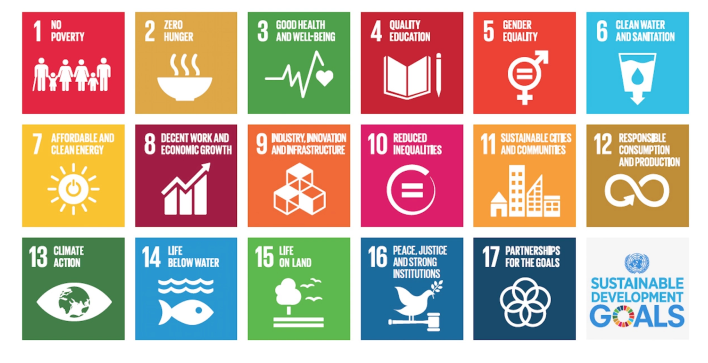
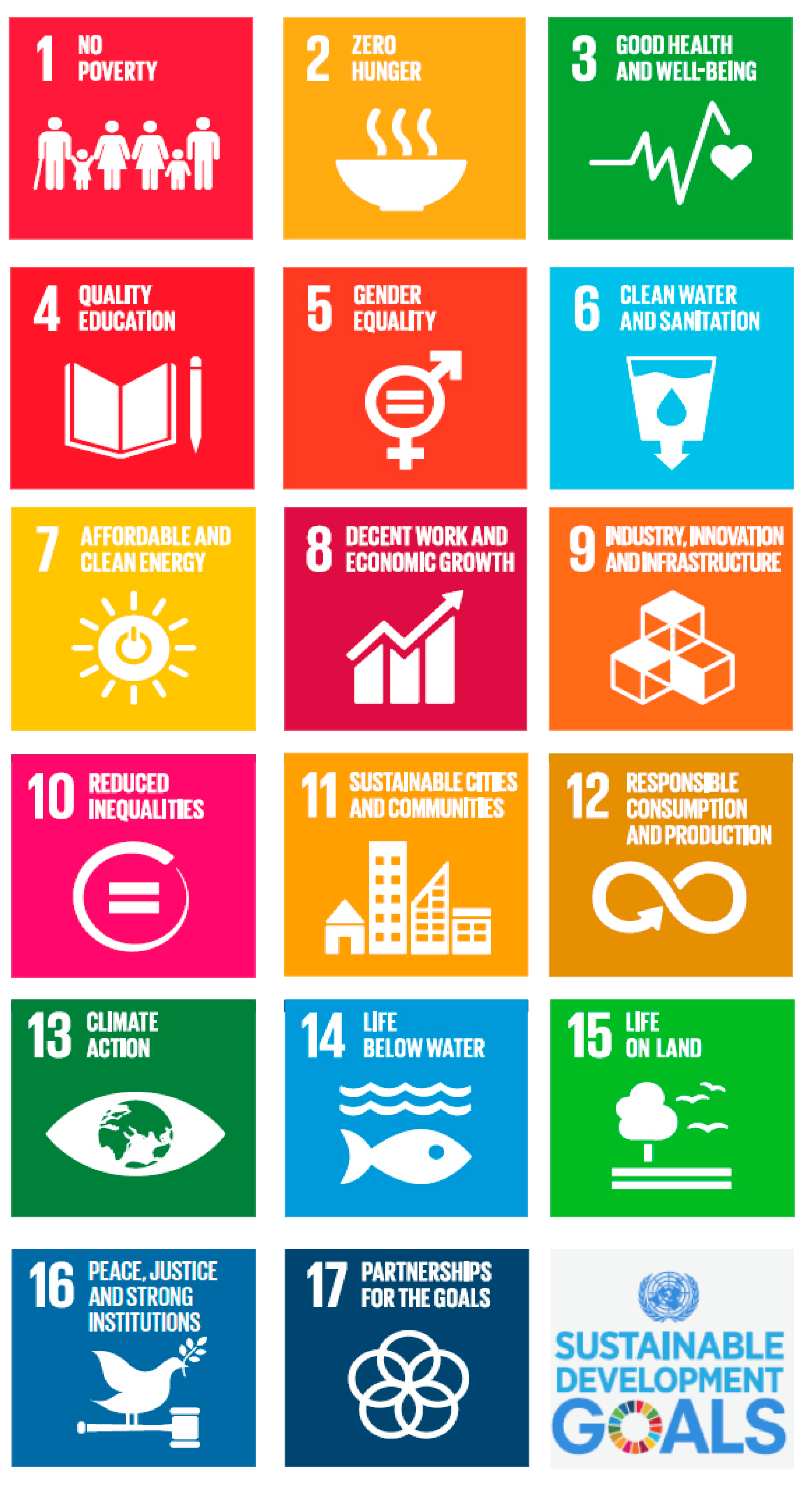
The SDGs were developed through an inclusive and participatory process that involved governments and stakeholders from around the world. This ensured that the agenda reflected a broad range of perspectives and priorities. The intention is that the SDGs will be fully achieved by the year 2030, which would be a great achievement for humanity, however, there are numerous challenges ahead.
According to reports from the United Nations and several international organizations, progress has been uneven. While progress has been made on some SDGs, others remain challenging. For example, the goal of eradicating extreme poverty and hunger is still far from being achieved, as is the goal of action against climate change.
On the other hand, the 2030 Agenda has also been a powerful catalyst for action. Created as a framework that governments, businesses, and civil society can use to guide their efforts. There is increasing global awareness of the importance of sustainability, and many sectors are taking steps to reduce their negative environmental and social impacts and promote more inclusive and sustainable development.
But, after all, how long until the 2030 agenda is completed?
Follow our countdown timer at the top of the ESG Journey platform and understand how little time is left before we reach the goals of the 17 UN Sustainable Development Goals.
To learn about the 169 goals included in the 17 SDGs, click here.
In other words, the acronym ESG (environmental, social, and governance) was born from a social context that began to see the private sector as an important player not only in terms of economic development, but also as co-responsible for environmental conservation and the advancement of human rights justice, from the outside.
The term ESG was coined in 2004 in a publication by the Global Compact in partnership with the World Bank, called Who Cares Wins. It arose from a challenge by UN Secretary-General Kofi Annan to 50 CEOs of large financial institutions about how to integrate social, environmental, and governance factors into the capital market.
And more recently, the term gained strength through an economic bias, when Larry Fink, co-founder of the largest investment manager in the world, in 2020, in one of his letters addressed to shareholders, emphasized the importance of looking at aspects that involve respect for human beings and nature from the perspective of business and the way it is done, shedding light on ESG factors from a governance based on purpose, profit, transparency and risks.
However, although not known by the acronym ESG, socio-environmental and governance metrics were already considered by some movements, as happened in the 60s and 70s, in the civil rights, anti-war, and environmental movements in the USA. Investors have begun to exclude companies linked to the war in Vietnam and Apartheid from their investments.
Our purpose is to connect you with true agents of change who believe and work for a fairer, more sustainable and prosperous world in different layers of society.
Marcel Guariglia
That is, long before we got to know ESG as it is today, the indicators were already observed by movements that had looked back at socioenvironmental responsibility and were aware of their role in whole society.
Although the purpose is the same as the 2030 Agenda, the three letters represent market indicators of how aware a company is, how its processes are carried out, how its employees are led, engaged, and included, how it relates to society, and how it deals with its entire value chain and how it manages natural resources.
Em suma, durante muito tempo os ODS eram interpretados como “uma lista de desejos”, por diversas organizações, mas após as seguidas cartas de Larry Fink colocando a sustentabilidade no centro dos investimentos, uma forte pressão dos millennials, geração nascida entre os anos de 80 e 2000, caracterizada justamente pelo nível elevado de conscientização socioambiental, o ESG ganhou força e nos dias de hoje se estabelece como a principal diretriz de relação entre os mercados de investimento, consumidores conscientes e organizações civis, públicas e privadas ao redor do mundo.
According to a 2019 Morgan Stanley survey, 95% of millennials expressed interest in sustainable investing, compared to 85% of the total population. In addition, 67% of millennials believe that investment practices should target not only the financial return, but also the social and environmental impact.
Tudo isso impulsiona gestores e executivos a entenderem o quanto as métricas ESG estão associadas a gestão de riscos econômicos, mercado de capitais e reputação das organizações. Além de apresentar um verdadeiro diferencial e fator mandatório de mercado, o requisito de sustentabilidade garante perenidade nos negócios.
And when we talk about “good practices”, “sustainability”, “consistent objectives and goals” we ask ourselves: how to start our ESG Journey?
É aí que nasce a expedição Jornada ESG, uma rota traçada com o objetivo de desmistificar a sigla, mostrando a relação entre o mercado de capitais, visão estratégica das organizações e a sua relação com os 17 ODS da ONU.
Apresentar soluções ambientais, sociais e de governança em 18 países e acima de tudo fortalecer a relação entre iniciativas da sociedade civil, organizações e gestores públicos é um dos objetivos principais da Jornada ESG.
Welcome to the ESG Journey.
Marcel Guariglia
The Lectures
If we think about the not too distant future, we would certainly try to draw a line of reasoning connecting the main technological innovations, artificial intelligence, cryptoeconomics, mobility, green industries, systematization and efficiency of processes, greater diversity and inclusion in society, and behavioral trends linked to an increasingly practical and healthy life, but we could not fail to mention mental health care as a fundamental factor for human development, as well as the so-called “softs skills” in the labor market.
But... is all this intellectual evolution, based on creativity, technological innovations accompanied by mental and spiritual evolution?
Does all the resilience dedicated to the Growth Journey have more to do with intellectual, mental, or spiritual property?
Considering how many companies are re-signifying their values, missions, and visions, and adapting them to a culture of purpose, we can consider that the word purpose has everything to do with the development of humanity from another perspective.
According to artificial intelligence, “purpose” means:
"Having a purpose means having a clear direction and an intrinsic reason or what you are doing, which can bring a sense of meaning and fulfillment to life's activities."
“Often, people seek to find purpose in their lives to feel more connected to themselves and the world around them.”
Intrinsic reason…
Sense of meaning…
Is this the beginning of the Growth Journey or rather the ESG Journey?
Hasn't the time come to re-signify "our way of living in society and relating to nature?
Has the time come to understand that if we do not eradicate poverty, fight hunger, and accept differences, and different individuals, social crises, rates of violence, and wars will not stop?
If the term ESG connects you to fashion or just an economic bias, this journey is not for you, as the true ESG Journey will connect you to your most intrinsic values, give you a sense of meaning and make you feel more connected to yourself and the world around you.
Contextualizando – há muito tempo a sustentabilidade faz parte de pautas sociais. Nunca se questionou tanto a importância da responsabilidade humana frente a natureza e a finitude dos recursos naturais. No entanto, até pouco tempo, a agenda não atingia todas as camadas sociais e todos os envolvidos na engrenagem social e de desenvolvimento econômico, a iniciativa privada, por exemplo, não se via como parte dessa preocupação, em um conceito ultrapassado de capitalismo e os detentores do poder econômico possuíam apenas uma preocupação: a maximização do lucro.
However, in the current context, sustainability is seen as a fundamental factor for the success and longevity of companies. Investors, consumers and stakeholders are increasingly aware of the impacts of business activities on the environment, society and corporate governance, demanding that companies be responsible and take concrete measures to mitigate their negative impacts.
Our purpose is to connect you with true agents of change who believe and work for a fairer, more sustainable and prosperous world in different layers of society.
PAVING THE FRONTIERS OF SUSTAINABILITY
Ideas, Pathways, and Initiatives for a Better World
The ESG Journey expedition traces the route of approximately 50,000km, addressing environmental and social solutions, as well as trends in technological innovations in 18 countries throughout South America, Central America and North America.
Our expedition begins in the extreme south of Ushuaia-ARG and on a route to Chile, Northern Argentina, and Uruguay, we will get to know closely the main challenges of the poles, climate change, melting glaciers, endangered species, and scientific research.
In Brazil, we will go through the main Brazilian capitals knowing solutions aimed at sustainable cities and communities. In more distant cities, we will address topics such as energy efficiency, poverty eradication, the fight against hunger, quality education, and the reduction of inequalities.
In the main Brazilian biomes, we will also address the importance of biodiversity for the development of the bioeconomy, sustainable and regenerative agriculture, the carbon market and the preservation of rivers, lakes, and oceans.
After almost 70 days traveling through Brazil, we will continue traveling through the countries: Bolivia, Peru, Ecuador, and Colombia and thus we will know closely initiatives aimed at socio-environmental development, preservation of ancestral culture and native peoples, and their relationship with environmental preservation.
In Central America, we will address topics related to the environmental challenges of the Panama Canal, environmental solutions in Costa Rica, one of the most sustainable countries in the world, social challenges in Nicaragua and Honduras, the officialization of the bitcoin currency in El Salvador, and the reduction of inequalities in Guatemala and Belize.
Seguimos viagem para México, Estados Unidos e Canadá e assim iremos entender os principais desafios do século XXI e como podemos tornar as cidades e comunidades cada vez mais sustentáveis através da indústria, inovação e infraestrutura, gerando oportunidades de trabalho decente e crescimento econômico.
Marcel Guariglia